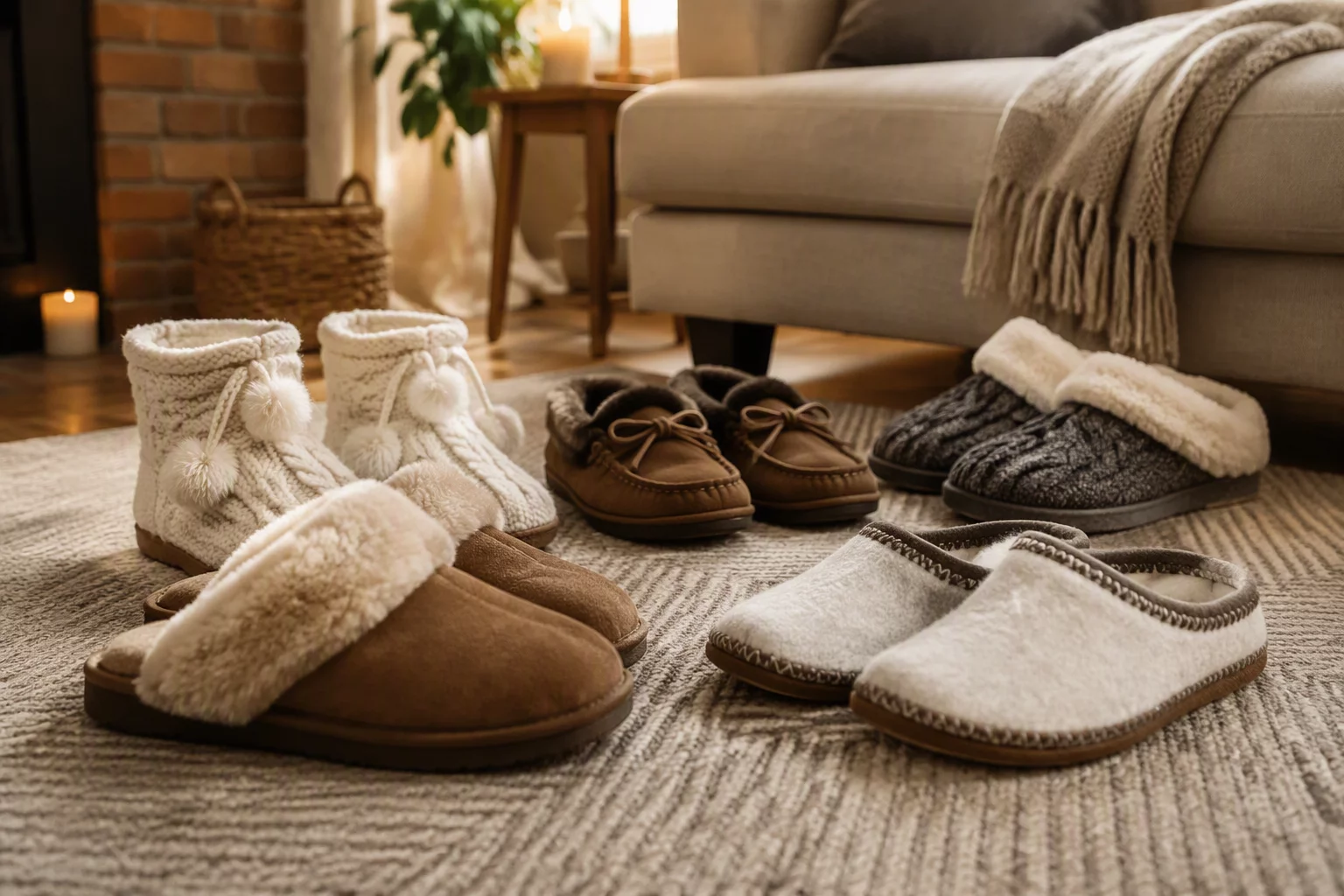
Finding the right indoor footwear for cold months means balancing insulation, foot climate, and structural support across drafty hardwood and cold tile floors.
When sub-zero temperatures arrive, cold floors quickly drain warmth from bare or thinly covered feet. Selecting winter house shoes requires more consideration than simply picking the softest pair on display. Quality slippers safeguard posture, cushion joints on hard surfaces, and regulate temperature throughout long indoor days.
Key Materials for Warmth and Natural Breathability
Upper materials and internal linings govern how slippers retain warmth while venting everyday foot moisture. Synthetic linings can trap sweat, whereas natural textures maintain a dry, steady foot temperature.
- Natural Wool & Boiled Felt: Traps body heat while expelling moisture, keeping feet dry even when worn alongside thick winter socks.
- High-Density Memory Foam Layers: Contours to pressure points beneath heels and arches, cushioning heavy steps on unforgiving floorboards.
- Textured Rubber Outsoles: Provides reliable traction on smooth tile or stairs while blocking cold drafts rising from lower floorboards.
Care Essentials Note
Thin outsoles conduct cold directly into foot arches on basement or concrete subfloors. Choose pairs with thick EVA or multi-layer insulated soles to prevent thermal loss.
Matching Slipper Style to Daily Home Routines
Open-back scuffs offer convenient step-in convenience for morning coffee routines, but let heat escape around the heel. Closed-heel moccasins and insulated booties lock in warmth and keep the foot securely aligned during household tasks.
Arch Support and Roomy Sizing
Proper indoor shoes allow the toes to spread naturally without pinching. If you wear heavyweight knitted socks during mid-winter, choose a slightly roomier fit so blood circulation stays unhindered throughout chilly evenings.
Sophie
Verified Reader Winter CareI finally know what to look for.
Chris
Verified Reader Thermal CareAwesome read.